English
Intent
At Higham, English and the teaching of English is the foundation of our curriculum. Our main aim is to ensure every single pupil becomes primary literate and progresses in the areas of reading, writing and speaking and listening. English is embedded within all our lessons and we will strive for a high level of English for all.
Higham Primary School shares the aims of the National Curriculum for English (2014) by ensuring that all pupils:
- read easily, fluently and with good understanding
- develop the habit of reading widely and often, for both pleasure and information
- acquire a wide vocabulary, an understanding of grammar and knowledge of linguistic conventions for reading, writing and spoken language
- appreciate our rich and varied literary heritage
- write clearly, accurately and coherently, adapting their language and style in and for a range of contexts, purposes and audiences
- use discussion in order to learn; they should be able to elaborate and explain clearly their understanding and ideas
- are competent in the arts of speaking and listening, making formal presentations, demonstrating to others and participating in debate.
At Higham, we believe that all pupils should have the opportunity to be fluent, confident readers who are able to successfully comprehend and understand a wide range of texts. We want pupils to develop a love of reading, a good knowledge of a range of authors, and be able to understand more about the world in which they live through the information they gain from texts. By using high-quality texts, immersing children in vocabulary rich learning environments and having a clear progression of skills, the children at Higham will experience a language-rich, creative and continuous English curriculum that equips them with the knowledge and skills to become confident readers, writers, speakers and listeners, while nurturing a love of reading, creativity and effective communication.
At Higham, we believe that all pupils should be able to confidently communicate their knowledge, ideas and emotions through both spoken and written language. Developing strong oracy skills is central to this: pupils should learn to express themselves clearly, listen actively, and engage in purposeful dialogue that deepens understanding We want pupils to acquire a wide vocabulary—both spoken and written—a solid understanding of grammar, and be able to spell new words effectively by applying the spelling patterns and rules they learn throughout their time in primary school. We want them to write clearly, accurately and coherently, adapting their language and style in and for a range of contexts, purposes and audiences. We believe that all pupils should be encouraged to take pride in the presentation of their writing, in part by developing a neat, joined handwriting style by the time they move to secondary school. We believe that all good writers refine and edit their writing over time, so we want children to develop independence in being able to identify their own areas for improvement in pieces of writing, editing their work effectively during and after the writing process.
We understand the importance of parents and carers in supporting their children to develop word reading, comprehension skills, grammar, spelling and composition skills, and encourage a home-school partnership which enables parents and carers to understand how to enhance the skills being taught in school through high-quality texts.
Implementation
In our school, the teaching of English allows pupils to incrementally build their skills in reading and writing within a carefully designed curriculum. We have a rigorous and well organised English curriculum and framework that provides many purposeful opportunities for reading, writing and discussion. We use a wide variety of high-quality texts, including fiction, non-fiction, poetry and film clips, to motivate and inspire our children, while incorporating meaningful cross-curricular links where appropriate to enrich learning and provide purposeful contexts for reading, writing, speaking and listening.
Oracy
Oracy underpins the development of reading and writing and is woven throughout the curriculum—cognitively, socially and linguistically. The quality and variety of language pupils hear and use are essential for building vocabulary, grammar, and understanding. Teachers develop pupils’ confidence and competence in speaking and listening by creating strong foundations through discussion and debate. Pupils are encouraged to listen carefully, respond appropriately, ask questions to deepen understanding, and articulate and justify answers, arguments and opinions. They learn to give clear, structured explanations and narratives for different purposes, maintain attention in collaborative conversations, and consider and evaluate alternative viewpoints. Opportunities for purposeful talk are woven throughout the English curriculum. Through discussion, debate, role play, drama, presentations and performance, pupils learn to explore and articulate ideas, listen and respond to others, develop and apply vocabulary, and adapt their spoken language for different audiences and purposes. Oracy is also used to support and enrich reading and writing, enabling pupils to rehearse ideas, develop their thinking and communicate with increasing confidence and clarity. Drama provides further opportunities to develop creativity, imagination and empathy.
Phonics
Phonics is taught throughout the school using the Read Write Inc. (RWI) scheme, which provides a structured, systematic approach to teaching sounds, blending, and segmenting. Children begin phonics as soon as they join Reception, initially as a whole class, focusing on recognising letter sounds and learning how to read and write them. Once children have been taught the first 16 sounds, they move into smaller, ability-based groups led by the class teacher or a trained teaching assistant. This grouping continues through Reception and into Key Stage 1.
Phonics sessions take place daily and include reading decodable books matched to each child’s phonics level, so they can apply their skills straight away. Children are assessed regularly to ensure they are in the right group for their stage of learning and to support rapid progress.
In the summer term of Year 1, pupils take the statutory Phonics Screening Check, which assesses their ability to apply what they have learnt. Parents are informed of their child’s achievement at the end of the school year. Pupils who do not pass receive targeted intervention to secure these key skills.
Reading
We aim to develop fluent, confident readers who actively monitor their understanding and re-read when meaning is unclear. In reading lessons, pupils are explicitly taught a range of comprehension strategies—including inference, questioning, clarifying, summarising, prediction, and activating prior knowledge—and learn to apply these to overcome barriers to understanding. They also develop skills such as skimming, scanning, forming opinions, thinking aloud, and connecting ideas. In Key Stage 2, whole-class reading develops pupils’ fluency, vocabulary and comprehension through the shared exploration of a broad range of high-quality texts. Teachers explicitly teach the knowledge, strategies and behaviours that successful readers use to construct meaning, drawing upon a range of approaches and resources, including frameworks such as VIPERS where appropriate. Pupils are taught to retrieve and interpret information, make and justify inferences, explore vocabulary and authorial choices, summarise and predict, and support their responses with evidence from the text. Regular opportunities to hear fluent reading modelled, read aloud and revisit texts help pupils develop accuracy, confidence and increasing independence as readers. Through engagement with a rich and varied range of fiction, non-fiction, poetry and other texts, pupils deepen their understanding of language and the world around them, while developing culturally, emotionally, intellectually, socially and spiritually.
At Higham, we use the Read Write Inc. (RWI) programme to teach early reading skills in Reception and Key Stage 1. This structured approach helps children learn to read through phonics in a clear, systematic way. Pupils take home phonics-based scheme books that are fully decodable and carefully matched to the sounds they have learnt in school, so they can practise confidently and successfully at home.
As children become fluent readers, they move on to the Accelerated Reader (AR) programme. AR encourages independent reading by allowing pupils to choose books matched to their reading level and interests. After finishing a book, children complete a short online quiz, which helps teachers monitor progress and celebrate success. This approach motivates pupils to read widely and regularly, building comprehension skills and a lifelong love of reading.
The scheme is structured to ensure that children have access to a wide range of texts and allows for pupils to develop their skills within a specific level before moving to the next level. Our aim for all pupils is to be on the Accelerated Reader programme by the beginning of Year 3. Where a pupil has been identified as not on track to achieve this target, intervention is put in place through 1:1 and small group reading support to enable them to catch up and achieve in line with their peers. Pupils are able to access books from our extensive library within their ZPD and once they have finished a text they then undertake a comprehension ‘quiz’ and/or vocabulary test. Time is allocated throughout the week for quiet reading and for children to complete a quiz. Assessments are analysed regularly to inform class teachers of pupils progress against their individual targets. Parents have access to and are able to view their child’s progress through the use of Home Connect.
Each classroom has vibrant and inviting reading area, with a range of non-fiction and poetry books relating to a variety of curriculum subjects to ensure engagement remains high. There is also a selection of books which are directly linked to the theme for the term so that pupils can apply their reading skills across the curriculum and read more widely around a subject.
All pupils have a home-reading record which they are encouraged to take home daily. Parents, carers and pupils are asked to add comments to indicate how much pupils have read.
Reading is celebrated in classrooms and around the school at Higham. Children are read to regularly and our bright and colourful displays celebrate the children’s favourite authors, characters and books. In addition, throughout the school year the importance of reading is enhanced through World Book Day.
Writing
At Higham, we teach English as whole class lessons, so that all children have access to the age-related skills and knowledge contained in the National Curriculum. Writing skills are developed through a text-based approach. From ‘hooking’ the pupils in at the start of a unit and exploring the text in order to build an understanding of the writer’s craft, pupils develop a deep understanding of the components of writing – planning, drafting, sharing, evaluating, revising, editing and then publishing. Texts are carefully chosen to deepen pupil’s knowledge of the wider curriculum, while ensuring pupils are immersed in our rich and varied literary heritage and high-quality vocabulary.
In Key Stage 2, we follow the Literacy Tree Writing Roots approach, using high-quality, diverse children’s literature as the foundation of our writing curriculum. Through the Teach Through a Text pedagogy, pupils engage deeply with carefully selected texts and use discussion, drama, oral rehearsal, reading and exploration of language to develop ideas and prepare for writing. Grammar, vocabulary and sentence construction are taught explicitly and purposefully within these contexts, enabling pupils to understand how writers make choices to communicate meaning and create particular effects. Writing is carefully sequenced towards meaningful outcomes with a clear audience and purpose. Pupils write across a broad range of forms and contexts and learn to make increasingly deliberate choices about content, vocabulary, sentence construction, organisation and tone. Teacher modelling, shared writing and guided practice provide pupils with the support they need before they apply their learning with increasing independence. Alongside composition, we recognise the importance of secure transcription skills. Spelling and handwriting are taught systematically so that pupils develop increasing fluency and automaticity, reducing demands on working memory and enabling greater attention to the content and craft of their writing. Pupils are taught that writing is a process and are given opportunities to plan, draft, evaluate, edit and refine their work, considering its effectiveness for the intended audience and purpose. Assessment is an integral part of teaching and is used to identify pupils’ strengths, misconceptions and next steps. Teachers draw upon a range of evidence from pupils’ writing to make informed judgements and adapt subsequent teaching. Through carefully sequenced instruction, appropriate scaffolding and additional practice where needed, we aim to ensure that all pupils make progress from their individual starting points and develop the knowledge, skills, confidence and creativity needed to communicate effectively through writing.
In Reception and the early part of Year 1, children take part in Drawing Club, a storytelling-based approach developed by Greg Bottrill. Each week, pupils enjoy a whole-class session using picture books, animations, or tales, which sparks imaginative discussions, introduces new vocabulary, and encourages creative drawing. The magic continues when children ‘press the magic button’ on their drawings—adding words, captions or sentences (the phonics or vocabulary being learnt)—so that drawing becomes writing with purpose and joy.
As children transition into Year 1, Drawing Club evolves into Curious Quests—an immersive, adventure-based literacy programme that builds on the wonder and creativity of Drawing Club. Curious Quests blends short whole-class carpet sessions, collaborative group work, and open-ended exploration—such as junk modelling, construction, or role play—to draw children into story, poetry and imaginative play. As children move through Year 2, the quests increase in depth and complexity, providing opportunities to explore a wider range of text types and purposes for writing, while continuing to foster curiosity, creativity and a love of learning. Through these experiences, children apply their phonics and SPaG knowledge in meaningful contexts and are driven by curiosity and choice, rather than dictated writing tasks.
Together, these programmes foster a love of writing—helping children to see themselves as authors, wanting to write for real reasons, whether to capture their ideas, describe their quests, or create stories with purpose.
Spelling
Spellings are taught according to the rules and words contained in Appendix 1 of the English National Curriculum. In Year 1, spelling is taught through daily phonics lessons to establish strong foundations. From Year 2 onwards, pupils follow the Spelling Shed programme, which builds upon their existing phonic knowledge and develops understanding of spelling patterns and rules. Spelling Shed is an engaging, interactive scheme that combines online games, activities, and resources to help children learn and apply spelling rules, including common patterns and exceptions. Each week, pupils have a dedicated spelling lesson to introduce the new spelling pattern, followed by opportunities to practise and apply this pattern throughout the week. Spelling Shed can also be accessed at home, supporting regular practice and reinforcement. When marking work, we do not correct all spelling errors, as this can demoralise children and inhibit their experimentation with more adventurous vocabulary. Instead, we focus on high-frequency words, topic words, and those studied in spelling lessons.
Grammar and Punctuation
Grammar and punctuation knowledge and skills are taught explicitly through English lessons, with an emphasis on making learning relevant to purposeful writing outcomes. In the Early Years and Key Stage 1, children encounter grammar and punctuation through Drawing Club and Curious Quests, where codes, challenges and literacy-rich experiences provide meaningful contexts for introducing and applying key concepts. In Key Stage 2, teachers introduce and develop these skills within the context of Literacy Tree Writing Roots units, enabling pupils to understand how grammatical and punctuation choices shape meaning and create effects for the reader. Skills are explicitly taught, modelled and practised before being applied within meaningful writing, and previously taught knowledge is regularly revisited to consolidate understanding and support confident, independent use. Additional retrieval practice supports long-term retention and enables teachers to address identified gaps or misconceptions. Where necessary, teachers may also provide focused teaching of specific grammar or punctuation skills to reinforce prior learning or deepen understanding.
Handwriting
At Higham Primary School, handwriting is taught through the Read Write Inc. handwriting programme, which provides a consistent and progressive approach from the Early Years through to Key Stage 2. In EYFS, children develop the foundations of handwriting through the explicit teaching of letter formation linked to phonics, alongside opportunities to develop fine motor control and pencil grip. As pupils move into Year 1, they are taught a mature handwriting style through the RWI Letter Formation and Letter Village lessons, building correct letter formation, orientation and consistency. Daily practice enables children to develop accuracy and fluency, supported by teacher modelling and regular opportunities for self-reflection and improvement.
In Year 2 and beyond, pupils progress to learning joins through the RWI programme, developing an increasingly fluent and efficient cursive handwriting style. Handwriting skills are taught explicitly, practised regularly and reinforced across the curriculum, enabling children to apply their learning in meaningful contexts. Where appropriate, additional support, such as highlighted lines, handwriting paper and targeted practice, is provided to ensure all pupils can be successful. Adults model the agreed handwriting style consistently in classrooms and in children's books, promoting high expectations for presentation across all subjects.
As pupils progress through the school, they are encouraged to develop a legible, fluent and increasingly automatic handwriting style that supports the quality and stamina of their written work. By the end of Key Stage 2, pupils are expected to write confidently, accurately and at speed, selecting appropriate letter forms and maintaining high standards of presentation across the curriculum.
Assessment
Assessment is an integral part of teaching and learning and is a continuous process. Teachers use formative assessment strategies daily to assess children’s learning and understanding, through: effective questioning, clear learning objectives, facilitating and listening to discussion, providing feedback and the marking of work, including identifying next steps in their learning. These ongoing assessments inform future planning and teaching. Lessons are adapted readily and interventions are put in place where necessary.
Impact
As a result, we aim to develop a community of enthusiastic readers, writers and communicators who approach literacy with curiosity, creativity and confidence, and who enjoy developing and showcasing their knowledge and skills. Pupils are confident in exploring texts, experimenting with language and writing choices, and discussing, articulating and sharing their ideas with others.
The impact of our curriculum is evident through pupils’ progress, sustained learning and their ability to apply knowledge and skills across a range of contexts. Through a well-sequenced and consistently taught English curriculum, pupils become confident and independent readers and writers. As they progress through Key Stage 2, they develop a secure understanding of different forms of writing and learn to make deliberate choices about vocabulary, sentence construction, grammar, punctuation, structure and style to suit audience and purpose. Greater fluency in transcription enables pupils to devote more attention to composition, authorial intent and writer’s craft.
As English knowledge and skills are developed and applied across the wider curriculum, pupils are able to transfer their learning to different subjects and contexts. Opportunities to read, write, speak and listen across the curriculum enable pupils to consolidate their understanding and recognise how language choices vary according to purpose, audience and subject. We aim for pupils to leave our school with the knowledge, confidence, creativity and enthusiasm for English that will enable them to access the next stage of their education and continue developing as readers, writers and communicators.
In summary, the impact of our English curriculum is that:
- pupils develop positive attitudes towards reading and writing and engage confidently with a broad and diverse range of texts and writing opportunities;
- pupils become fluent, accurate and independent readers, enabling them to focus on understanding, interpreting and responding to what they read;
- pupils develop the vocabulary and language knowledge needed to understand increasingly challenging texts and communicate ideas clearly and effectively in both spoken and written language;
- pupils develop knowledge of a broad range of authors, texts and literary traditions;
- pupils write with fluency and independence, adapting vocabulary, grammar, structure and style according to audience and purpose;
- pupils develop secure transcription skills, including fluent handwriting and the accurate application of spelling knowledge and conventions;
- pupils draw upon and apply their English knowledge and skills across the wider curriculum;
- pupils requiring additional support are identified promptly and receive appropriate teaching, practice and scaffolding to enable them to make progress towards ambitious curriculum goals;
- pupils develop the reading fluency, comprehension, writing and communication skills needed to access the curriculum successfully as they move into secondary education;
- parents and carers understand how they can support reading, spelling and writing at home and are encouraged to engage actively in their child’s literacy development
 Phonics
We use the Read Write Inc Programme to teach phonics. Further information can be found here:
Additional information about RWI Phonics can be found in the Phonics section of our website. Please click on the link below:
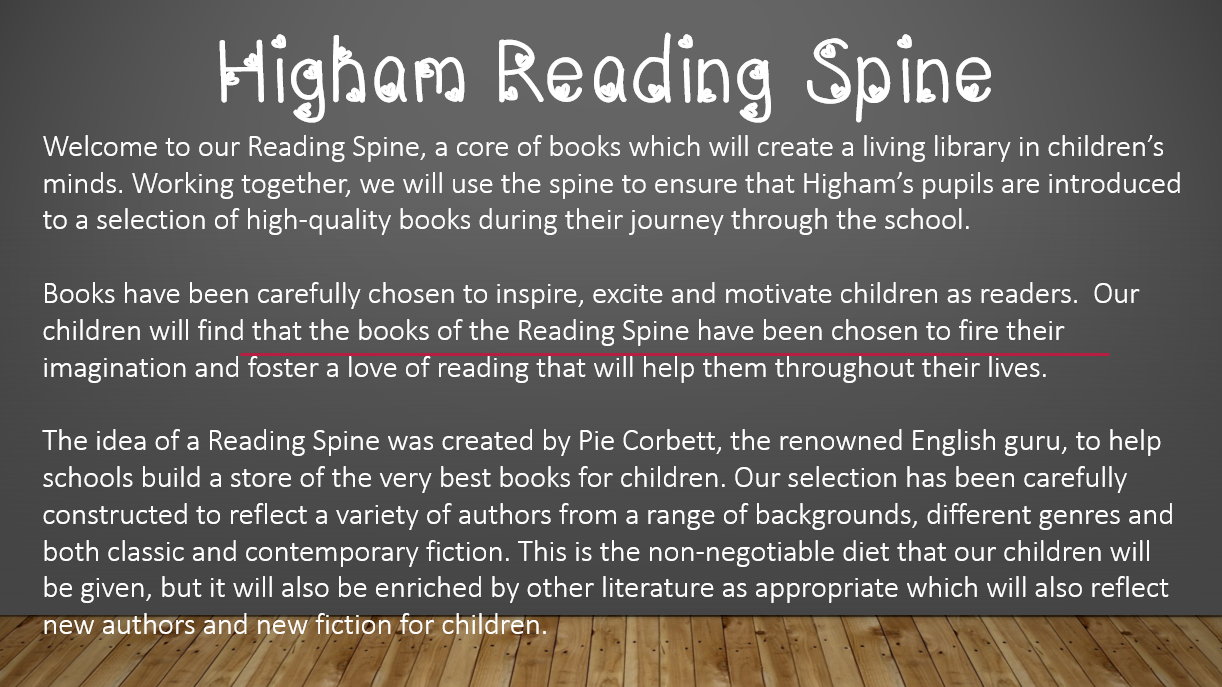
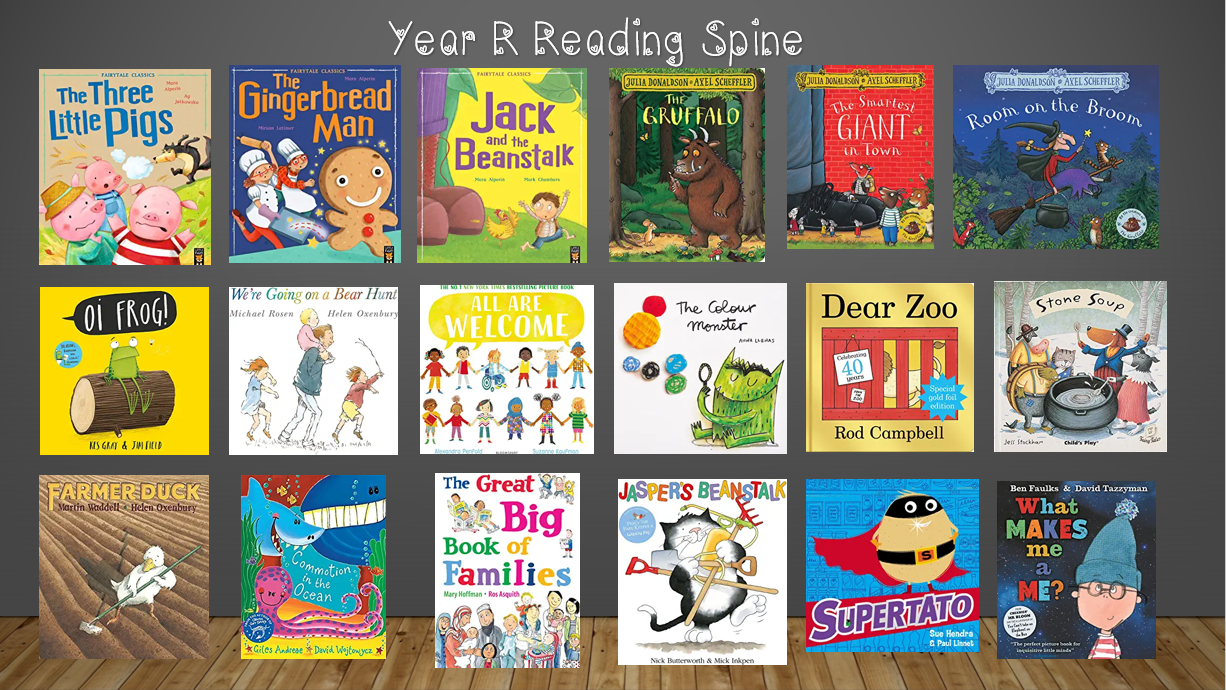
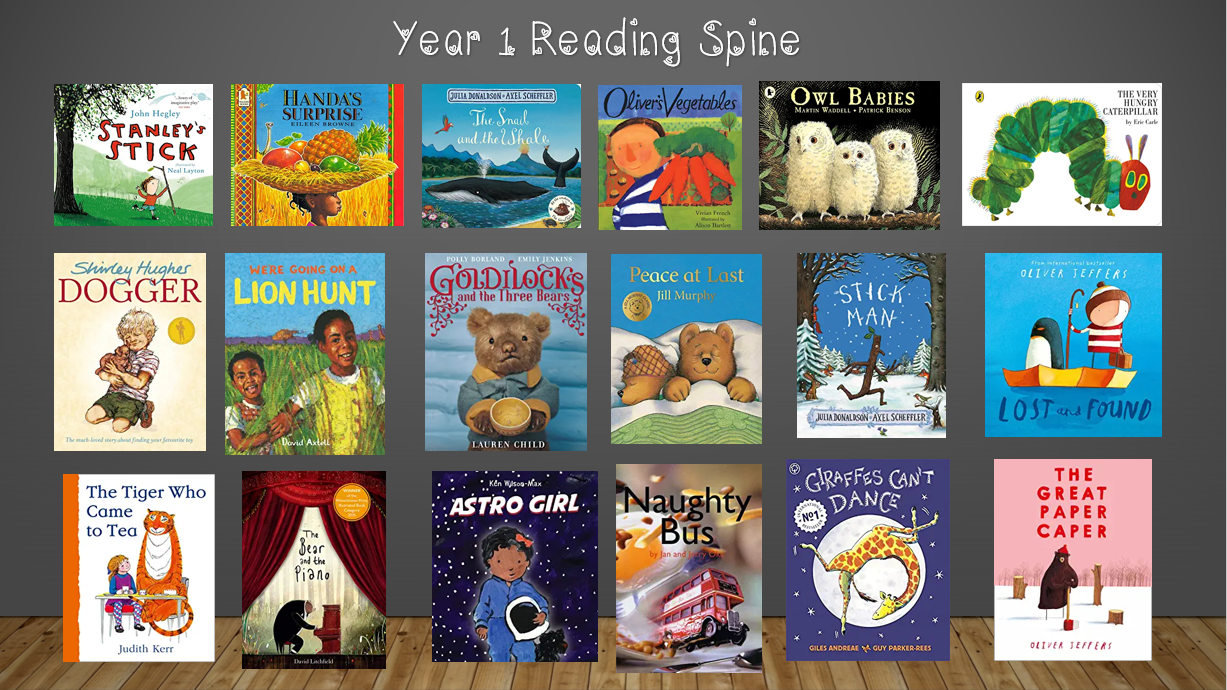
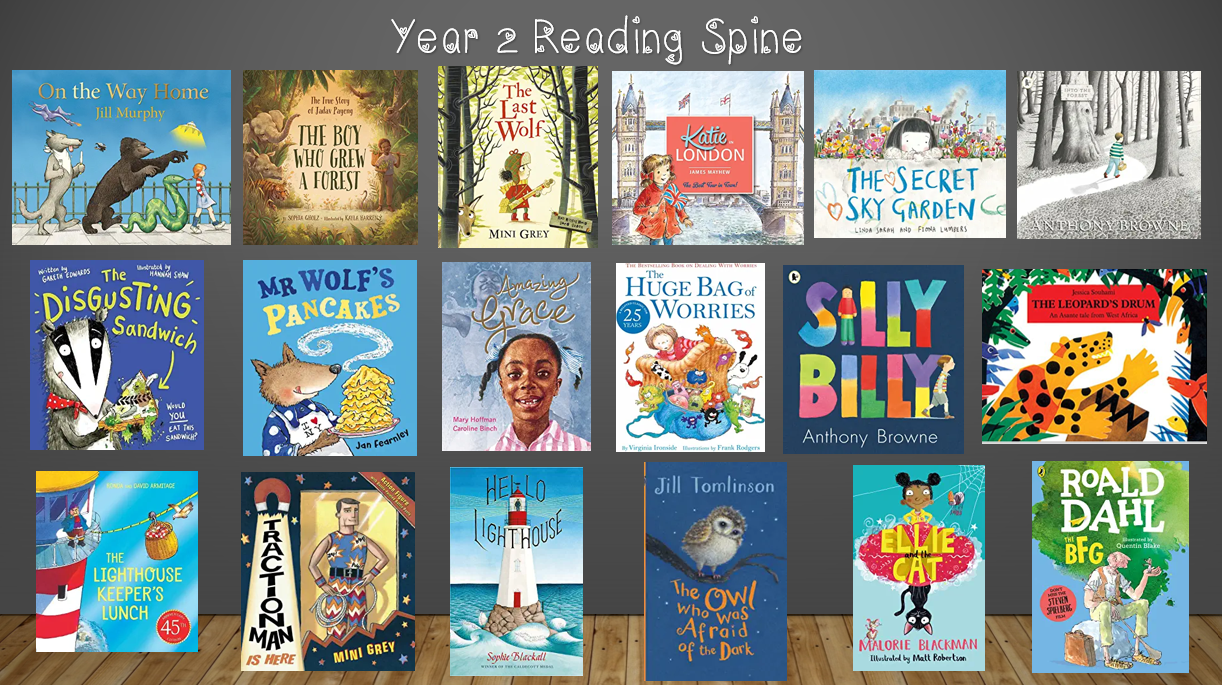
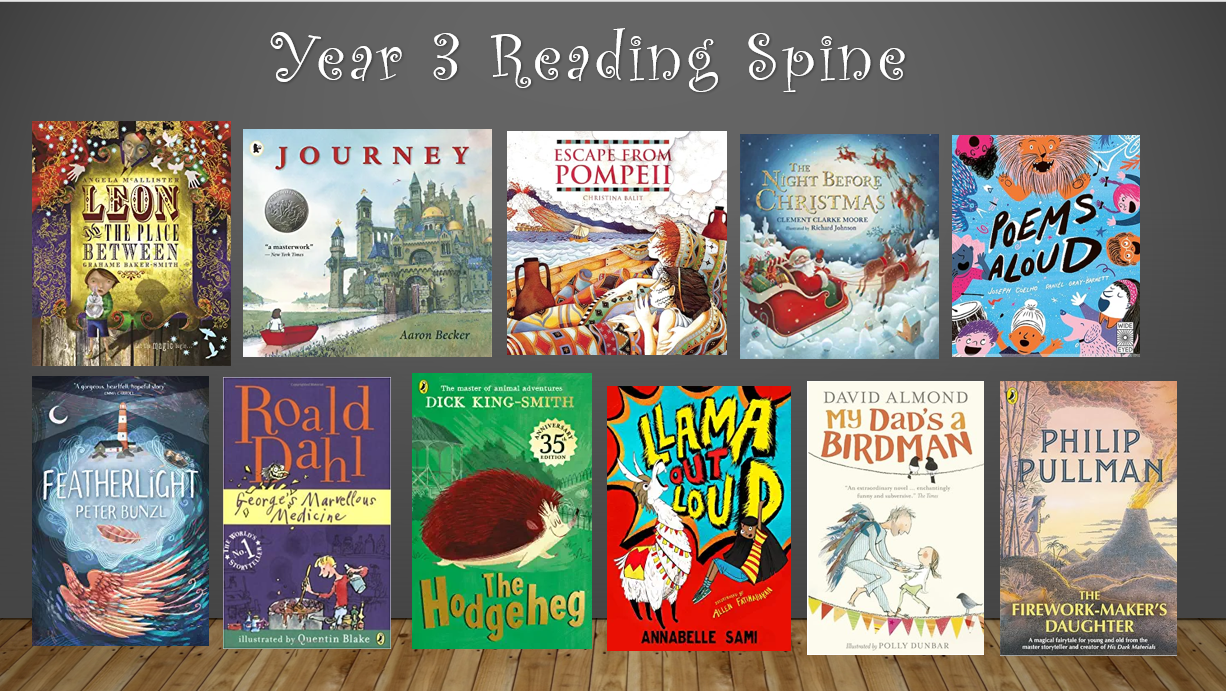
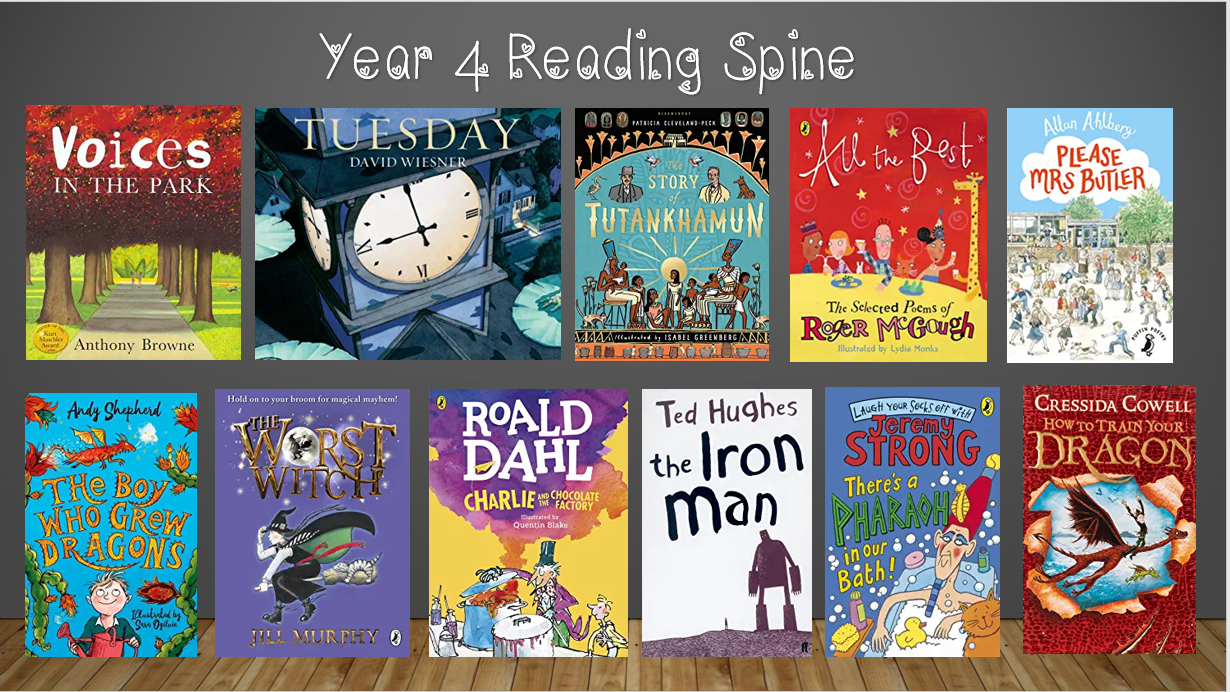
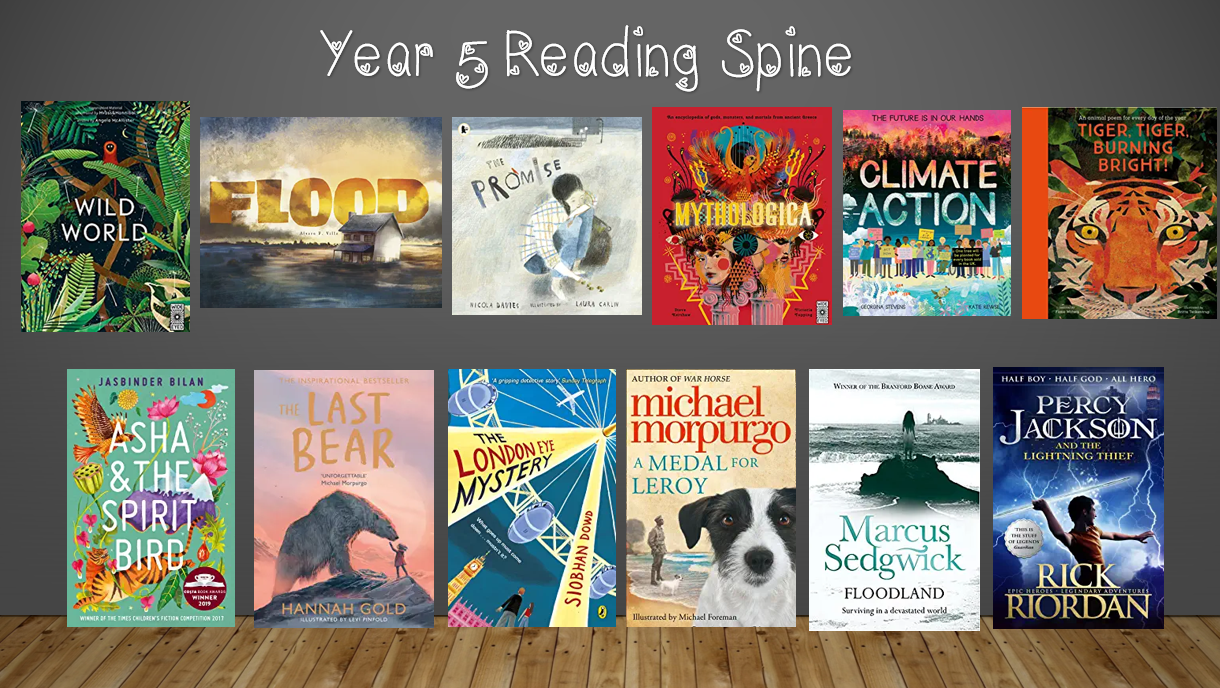
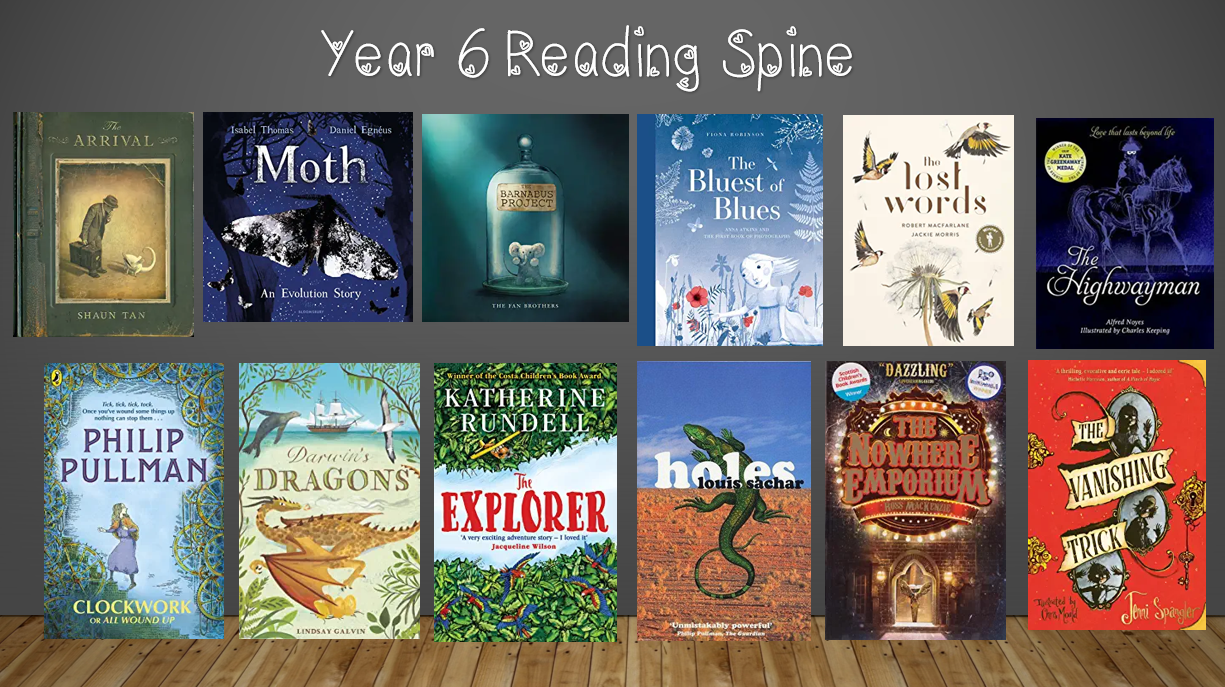
Higham Reading Spine
Welcome to our Reading Spine, a core of books which will create a living library in children’s minds. Working together, we will use the spine to ensure that Higham’s pupils are introduced to a selection of high-quality books during their journey through the school.
Books have been carefully chosen to inspire, excite and motivate children as readers. Our children will find that the books of the Reading Spine have been chosen to fire their imagination and foster a love of reading that will help them throughout their lives.
The idea of a Reading Spine was created by Pie Corbett, the renowned English guru, to help schools build a store of the very best books for children. Our selection has been carefully constructed to reflect a variety of authors from a range of backgrounds, different genres and both classic and contemporary fiction. This is the non-negotiable diet that our children will be given, but it will also be enriched by other literature as appropriate which will also reflect new authors and new fiction for children.
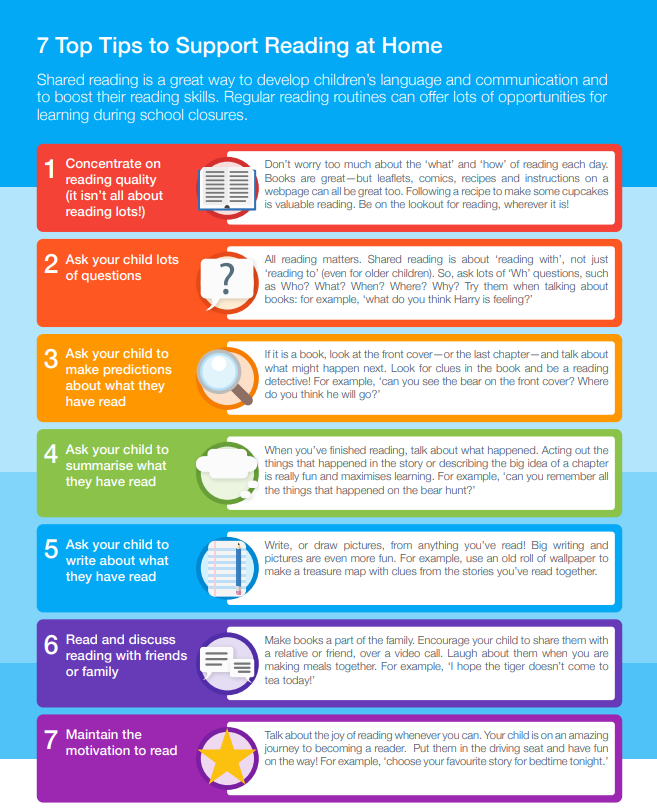
How to support your child reading at home from the Education Endowment Foundation.
Spelling Shed (Years 2 to 6)
Spelling shed is a new initiative launched at Higham Primary School this academic year. It is an online spelling programme designed to broaden pupils knowledge of the history behind language and widen their understanding of spelling patterns.
Pupils will be set weekly spellings which they are expected to practice and learn for their weekly spelling test. Pupils have the opportunity to play games and complete activities using the spelling shed website.
Please note you do not need to buy the app, you can use Spelling Shed for FREE on a web browser.